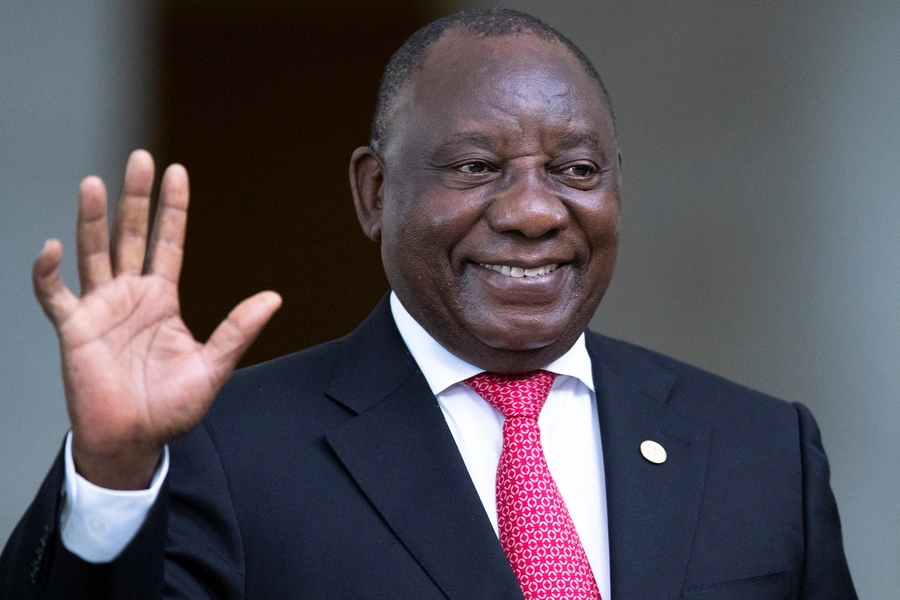
Cyril Ramaphosa is a South African politician, businessman, and trade unionist who serves as the President of South Africa. He is widely known for his role in the anti-apartheid struggle, his leadership within the African National Congress (ANC), and his transition from union activism to becoming one of the country’s wealthiest businessmen before returning to politics. People search for Cyril Ramaphosa to understand his background, his leadership style, his wealth, and how his ethnicity and religion have shaped his identity and public life. As a living political leader still in office, his relevance remains central to South Africa’s present and future.
Personal details and quick facts
| Field | Details |
|---|---|
| Full name | Matamela Cyril Ramaphosa |
| Date of birth | November 17, 1952 |
| Age | 73 years old |
| Nationality | South African |
| Ethnicity | Black African (Venda) |
| Religion | Christianity |
| Profession | Politician, businessman, former trade unionist |
| Height | Approximately 5 ft 7 in (170 cm) |
| Weight | Approximately 176 lb (80 kg) |
| Marital status | Married |
| Spouse / partner | Tshepo Motsepe |
| Children | Five |
| Net worth (2026) | Estimated $450–550 million |
| Salary | Presidential salary (state-regulated) |
Early life and upbringing
Cyril Ramaphosa was born on November 17, 1952, in Soweto, Johannesburg, during the height of apartheid. He grew up in a working-class family where discipline, responsibility, and education were strongly emphasized. His father was a policeman and court interpreter, while his mother worked as a clerk.
Raised as a Venda man within South Africa’s diverse Black African communities, Ramaphosa developed an early awareness of racial inequality and political injustice. His upbringing under apartheid deeply influenced his worldview and commitment to social change.
Education and political awakening
Ramaphosa attended Tshilidzi Primary School and later studied law at the University of the North and the University of South Africa. While a student, he became actively involved in anti-apartheid politics, which led to his detention on multiple occasions.
His political consciousness matured during this period, as he balanced academic work with activism. He trained as a lawyer, a skill that later proved critical in both political negotiation and business leadership.
Trade union leadership and rise to prominence
Cyril Ramaphosa rose to national prominence in the 1980s as a trade union leader. He became the General Secretary of the National Union of Mineworkers (NUM), where he organized hundreds of thousands of workers and negotiated with powerful mining corporations.
Under his leadership, NUM became one of the strongest unions in the country. Ramaphosa earned a reputation as a disciplined negotiator, capable of balancing worker demands with strategic pragmatism.
This period established him as one of the most influential Black leaders in South Africa before the end of apartheid.
Role in ending apartheid
Ramaphosa played a critical role in South Africa’s transition to democracy. He was a key negotiator in the constitutional talks that led to the dismantling of apartheid and the establishment of a democratic state.
He also chaired the Constitutional Assembly, helping draft South Africa’s post-apartheid constitution, widely regarded as one of the most progressive in the world. His legal background and calm negotiation style were instrumental during this historic period.
Shift from politics to business
After the first democratic elections in 1994, Ramaphosa stepped back from frontline politics. He transitioned into business, where he became one of South Africa’s most successful entrepreneurs.
He founded Shanduka Group, an investment holding company with interests in mining, energy, telecommunications, and financial services. Through strategic investments and partnerships, Ramaphosa accumulated substantial wealth, becoming one of the richest individuals in the country.
This business phase of his life significantly shaped public perception, positioning him as a bridge between political leadership and corporate power.
Return to politics and ANC leadership
Cyril Ramaphosa returned to politics in the 2010s, serving as Deputy President of South Africa before being elected President of the African National Congress. His return was framed as a response to growing concerns about governance, corruption, and economic stagnation.
In 2018, he became President of South Africa, inheriting a country facing deep economic challenges, institutional erosion, and public mistrust.
Presidency and leadership style
As president, Ramaphosa has emphasized anti-corruption efforts, economic reform, and institutional rebuilding. His leadership style is often described as cautious, consultative, and consensus-driven.
He has faced criticism for being slow to act at times, while supporters argue that his approach reflects the complexity of governing a deeply divided society. His presidency has been shaped by crises, including economic downturns and public health challenges.
Cyril Ramaphosa net worth (2026)
As of 2026, Cyril Ramaphosa’s estimated net worth ranges between $450 million and $550 million. His wealth stems largely from:
- Equity holdings accumulated during his business career
- Investments made prior to assuming the presidency
- Long-term corporate partnerships
Upon becoming president, Ramaphosa placed many assets into trusts and complied with disclosure requirements. He does not earn business income while in office, relying on his state-regulated presidential salary.
Ethnicity and cultural identity
Cyril Ramaphosa is Venda, a Black African ethnic group primarily associated with Limpopo Province. He has spoken publicly about cultural identity, unity, and the importance of respecting South Africa’s ethnic diversity.
His leadership often emphasizes inclusivity across ethnic and cultural lines.
Religion and faith
Ramaphosa identifies as a Christian. While not overtly religious in public rhetoric, he has referenced faith, prayer, and moral responsibility in national addresses, particularly during times of crisis.
His religious beliefs contribute to his emphasis on reconciliation, forgiveness, and ethical leadership.
Marriage and family life
Cyril Ramaphosa is married to Tshepo Motsepe, a medical doctor and businesswoman. She is also the sister of Patrice Motsepe, one of Africa’s wealthiest businessmen.
The couple has five children. Ramaphosa keeps his family life relatively private, though he often acknowledges the importance of family support in his demanding public role.
Lifestyle and assets
Despite significant wealth, Ramaphosa maintains a reserved and professional lifestyle befitting a head of state. He owns multiple properties but avoids ostentatious public displays of luxury.
His lifestyle reflects a balance between executive responsibility, national duty, and personal discipline.
Health and wellbeing
There are no publicly disclosed serious health conditions associated with Cyril Ramaphosa. He remains active in governance and international diplomacy, maintaining a demanding schedule well into his seventies.
Legacy and ongoing influence
Cyril Ramaphosa’s legacy is still being written. He is remembered as a constitutional architect, union leader, businessman, and president navigating one of the most complex periods in South African history.
Whether judged by economic reform, institutional rebuilding, or national unity, Ramaphosa remains one of the most consequential figures in contemporary African politics.