Scott Adams, the American cartoonist best known as the creator of the globally famous comic strip Dilbert, has died. His passing marks the end of a long, complex, and highly influential career that reshaped how office life and corporate culture were viewed through humor. Adams was widely known for his sharp satire, business insight, and later years of outspoken commentary that sparked both loyalty and criticism.
This article serves as a full obituary, covering Scott Adams’ life, career, cause of death, funeral information, personal background, and lasting legacy, written in clear and respectful language.
Scott Adams’ Obituary
Scott Adams was one of the most recognizable cartoonists of his generation. Through Dilbert, he gave a voice to office workers across the world who felt trapped in bureaucracy, mismanagement, and corporate confusion. His work became more than entertainment; it became a shared cultural experience for millions of employees who saw their daily frustrations reflected in his simple drawings and dry humor.
His death has prompted renewed discussion of his artistic impact, his controversial later years, and the enduring relevance of his work.
Cause of Death
Scott Adams died following a prolonged battle with advanced prostate cancer. He had publicly disclosed that the cancer had progressed and spread, describing his condition openly in the months leading up to his death. According to statements shared by those close to him, his illness had reached a stage where treatment options were limited, and he later entered hospice care.
The cause of death was complications related to metastatic prostate cancer. Adams chose transparency about his health, using his platform to speak candidly about mortality, suffering, and acceptance near the end of his life.
Funeral Arrangements
As of now, official funeral details have not been publicly announced. No confirmed information has been released regarding the date, location, or whether the service will be private or public.
In keeping with his generally private personal life, it is expected that funeral arrangements may be limited to close family and friends. Updates may be shared by his estate or family at a later time.
Early Life and Background
Scott Raymond Adams was born on June 8, 1957, in New York State. From an early age, he showed interest in drawing, humor, and observation. He grew up in a working-class environment and developed an early awareness of authority, systems, and how people behave within them.
Before becoming a cartoonist, Adams pursued education in business and economics. He earned a degree in economics and later completed an MBA. These academic and professional experiences would later become central to the worldview behind Dilbert.
Corporate Career Before Dilbert
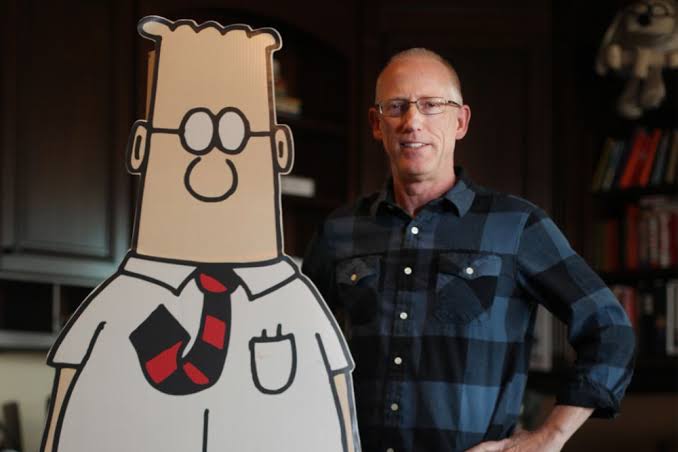
Prior to his success as a cartoonist, Scott Adams worked in the corporate world. He held office jobs in large organizations, including roles that exposed him to management structures, workplace politics, and inefficiency.
These experiences were not glamorous, but they were formative. The frustrations he encountered during these years directly inspired Dilbert. Adams often described drawing cartoons early in the morning before work, slowly refining a concept that many publishers initially rejected.
Rise of Dilbert
Dilbert debuted in 1989 and quickly gained attention for its focus on engineers, office workers, and incompetent management. Unlike traditional comic strips that centered on family life or slapstick humor, Dilbert targeted white-collar frustration with precision.
The strip grew rapidly and at its peak was syndicated in thousands of newspapers across dozens of countries. It became a daily ritual for office workers worldwide.
Key reasons for Dilbert’s success included:
- Simple but sharp humor
- Relatable workplace scenarios
- A consistent visual style
- Characters that embodied real corporate archetypes
Scott Adams received major recognition for his work, including prestigious cartooning awards. Dilbert expanded into books, calendars, merchandise, and animated adaptations.
Books and Business Commentary

Beyond comics, Adams authored several books that mixed humor with business insight. Some focused on management dysfunction, while others explored persuasion, decision-making, and success from his personal perspective.
These books extended his influence beyond entertainment and positioned him as a commentator on human behavior and organizational systems. Many readers found value in his ability to simplify complex workplace dynamics.
Net Worth and Financial Success
At the height of his career, Scott Adams built substantial wealth through:
- Newspaper syndication
- Book sales
- Licensing and merchandise
- Speaking engagements
His estimated net worth at the time of his death was believed to be in the tens of millions of dollars, reflecting decades of consistent global exposure and intellectual property earnings.
Controversies in Later Years
In his later years, Scott Adams became increasingly controversial due to political and social commentary shared through online platforms. Statements he made during livestreams and podcasts led to widespread backlash, resulting in many newspapers discontinuing Dilbert.
These events significantly affected his public standing and professional relationships. Despite this, Adams continued publishing his work independently and maintained a loyal audience that supported his right to speak freely.
His later career is often viewed as divided between his groundbreaking earlier work and the polarizing views he expressed in his final decade.
Personal Life, Family, and Relationships
Scott Adams was married more than once and had a complex personal life marked by relationships, separations, and private struggles. He did not have biological children but had family connections through marriage.
He was known to value independence and intellectual freedom, often preferring solitude and creative control over social popularity.
Religion and Beliefs
Near the end of his life, Scott Adams reportedly embraced Christian faith, a shift he acknowledged publicly. Throughout his career, his views on belief evolved, and in his final period he spoke more openly about spirituality, mortality, and meaning.
Health Struggles and Final Months
Adams’ health declined steadily following his cancer diagnosis. He spoke candidly about pain management, end-of-life planning, and acceptance. His openness about dying was unusual for a public figure and sparked discussion about how society talks about terminal illness.
He remained mentally active until late in his illness, continuing to communicate with his audience.
Legacy and Cultural Impact
Scott Adams’ legacy is complex but undeniable. He permanently changed workplace humor and introduced corporate satire into mainstream culture.
His lasting impact includes:
- Redefining office-based comedy
- Influencing workplace language and humor
- Creating one of the most recognizable comic strips of all time
While his later controversies reshaped how some view his career, Dilbert remains a defining cultural artifact of late-20th-century work life.
Conclusion
Scott Adams’ death closes the chapter on a career that blended humor, business insight, controversy, and cultural influence. His obituary reflects a life that was creative, provocative, and deeply impactful. From cubicles to boardrooms, his work shaped how millions understood work, power, and absurdity.
As funeral details await confirmation, discussions about his legacy continue. Whether praised, criticized, or debated, Scott Adams remains a figure who left a permanent mark on modern culture through Dilbert and beyond.